
Methodology
HOMEMETHODOLOGY
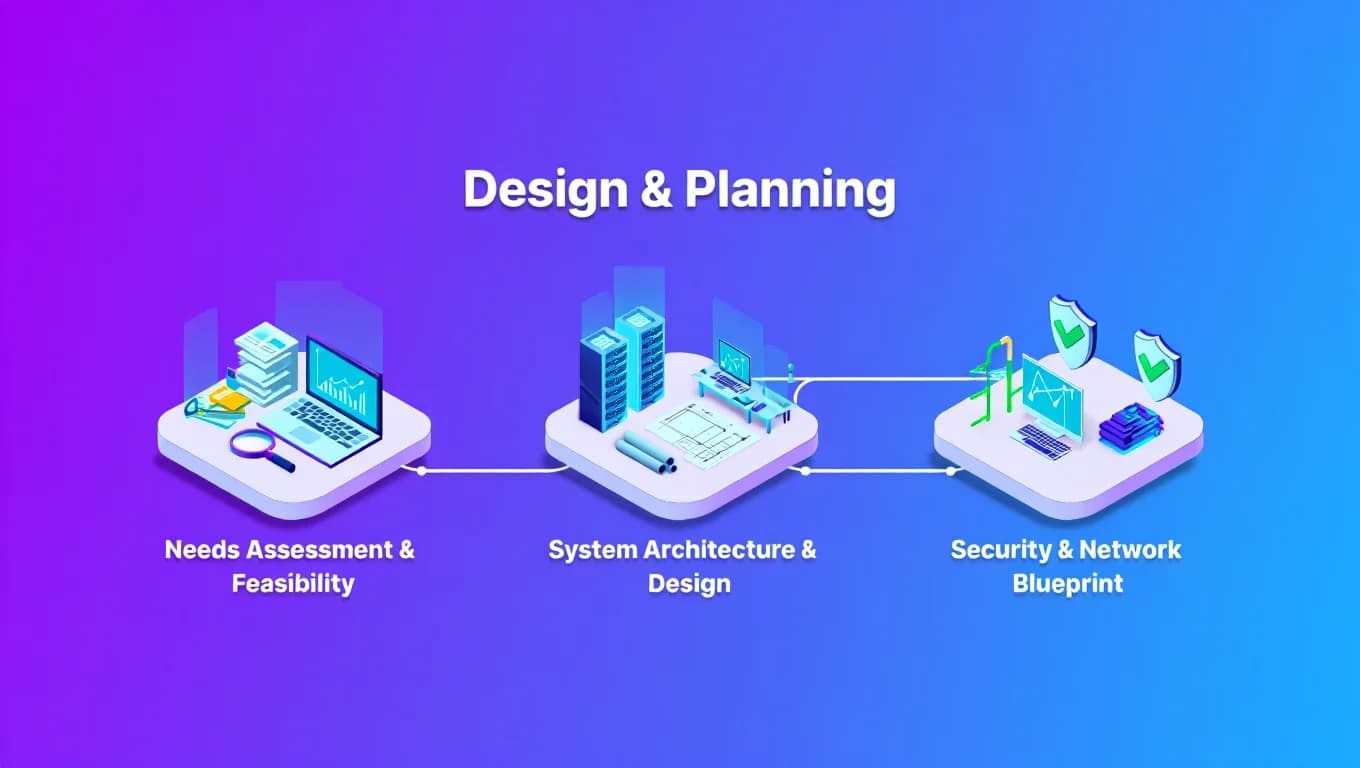
Design & Planning (The "What" and "How"):
Needs Assessment & Feasibility:
- Analyze the client's current infrastructure and specific requirements.
- Define the Key Performance Indicators (KPIs) and ROI targets.
- Identify regulatory compliance requirements.
System Architecture & Design:
- Design the blueprint that connects the four service pillars.
- Select the appropriate hardware and software platforms
- Establish data flow diagrams
Security & Network Blueprint:
- Design the Integrated Security architecture, including authentication protocols, intrusion detection systems, and data encryption standards across the network.
- Plan the Communication/Network infrastructure to ensure high bandwidth, low latency, and redundancy to support real-time autonomous command and control.
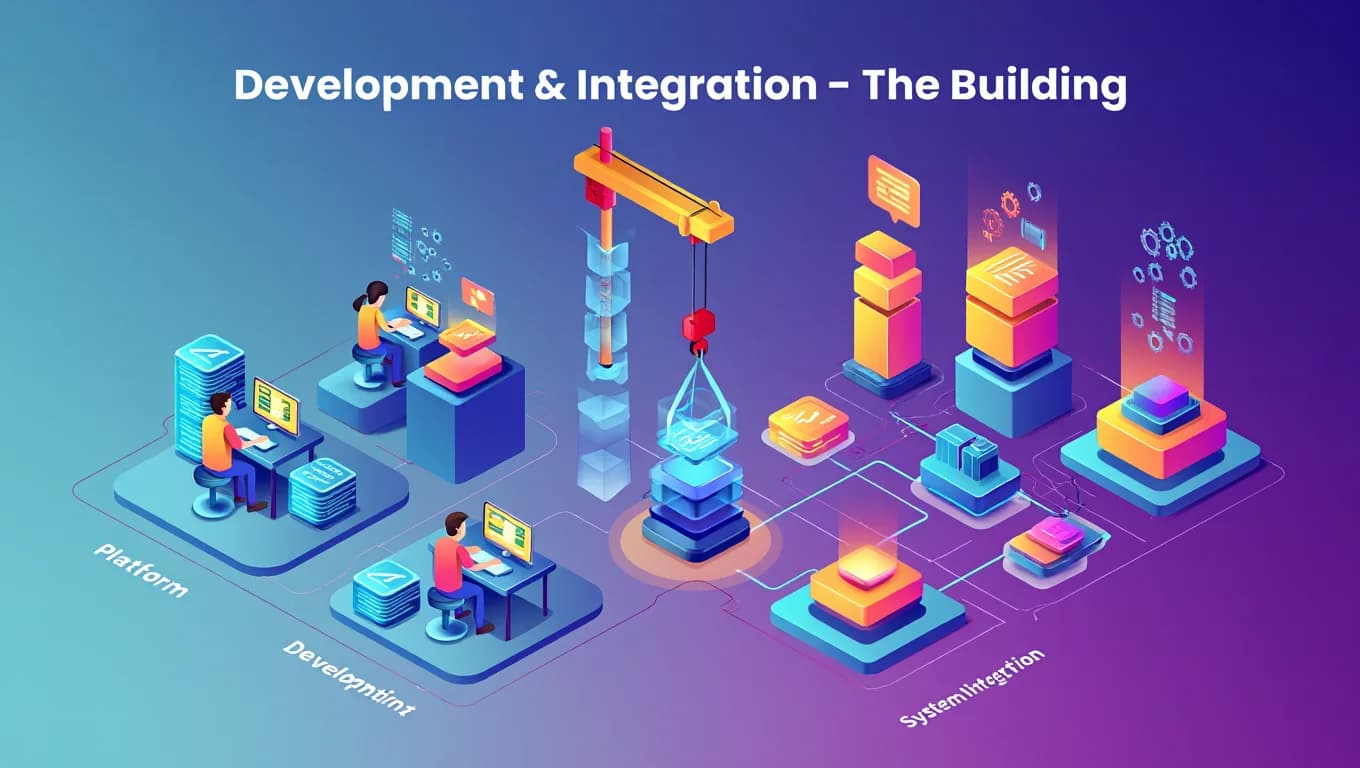
Development & Integration (The "Building"):
This phase involves building, configuring, and testing the individual components and integrating them into a cohesive system.
Platform Development:
- Develop or customize the core Autonomous Software Stack (algorithms for navigation, decision-making, and sensor fusion).
- Configure the Smart Infrastructure control systems (e.g., setting up IoT gateways, programming edge devices).
System Integration & Interoperability:
- Connect the Unmanned Systems ground control station (GCS) software with the central monitoring platform.
- Ensure all data streams (telemetry, security alerts, sensor data) are correctly flowing across the Communication Networks and ingested by the central data lake.
- Perform rigorous System Integration Testing (SIT) to ensure seamless data exchange between the different pillars.
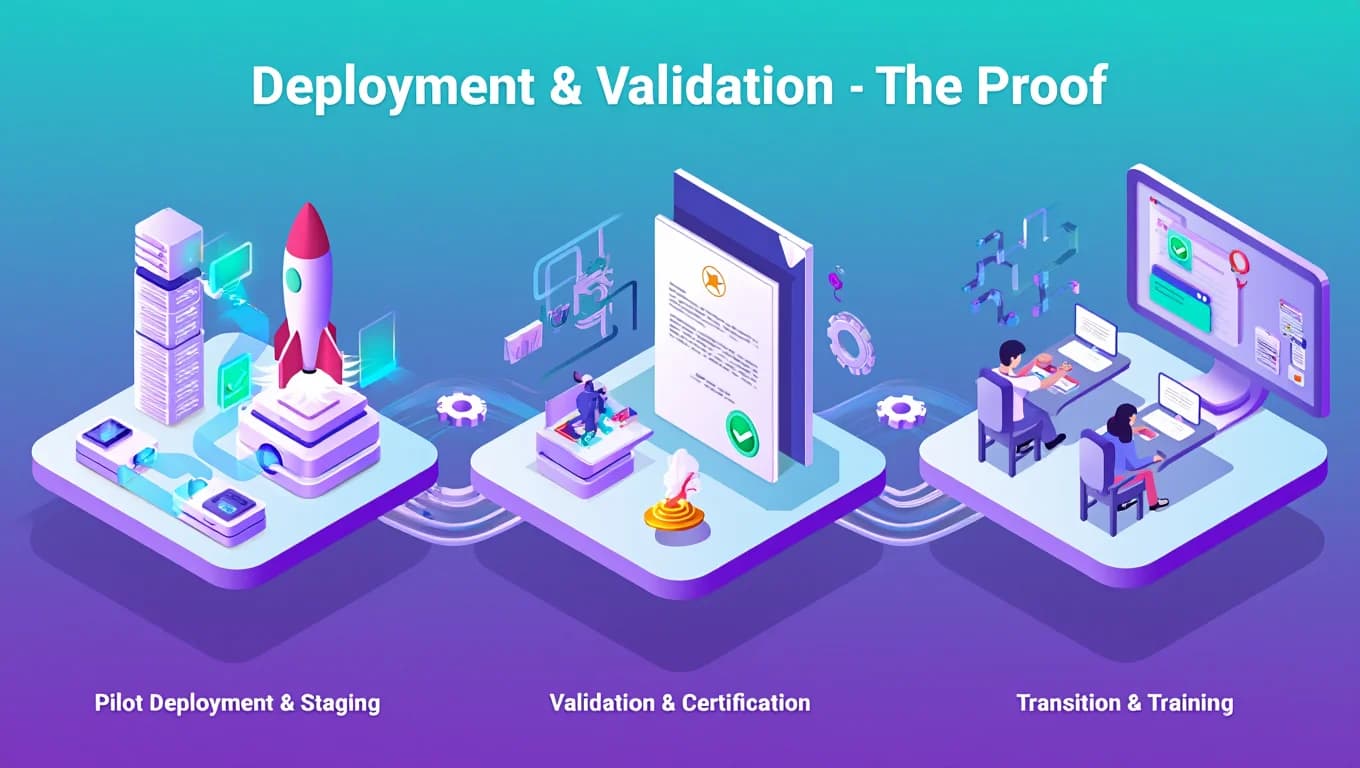
Deployment & Validation (The "Proof"):
This phase moves the system into a live environment and ensures it meets all functional and security requirements.
Pilot Deployment & Staging:
- Deploy the solution in a controlled, non-critical environment or a specific operational pilot zone.
- Conduct User Acceptance Testing (UAT) with key operational staff to gather real-world feedback.
Validation & Certification:
- Perform comprehensive Autonomous Mission Validation, testing the US under various conditions (weather, load, communications disruption).
- Validate the Integrated Security response protocols (e.g., testing the system's reaction to a cyber-intrusion attempt or physical breach).
- Obtain necessary regulatory sign-offs and certifications for the deployed system.
Transition & Training:
- Formally transition operational responsibility to the client's team.
- Provide extensive training for operators, maintenance crew, and security personnel on the new autonomous protocols and control systems.
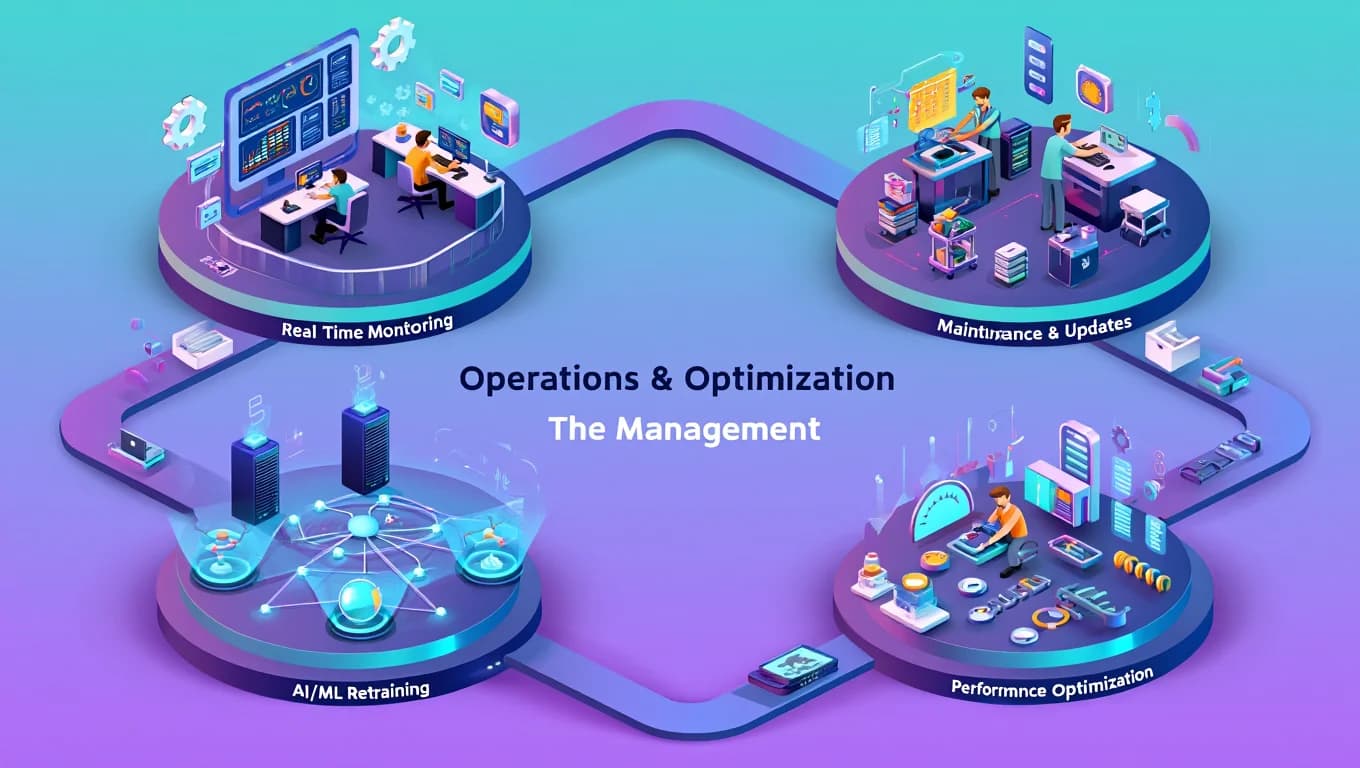
Operations & Optimization (The "Management"):
This is the ongoing stage where the system provides value and is continuously monitored, maintained, and improved.
Real-Time Monitoring & Management:
- Operate the Integrated Security center to monitor threats and system health 24/7.
- Provide continuous Network Management to ensure communication links remain stable and high-performance.
Maintenance & Updates:
- Perform routine and predictive maintenance on the Unmanned Systems fleet and Smart Infrastructure assets.
- Apply software patches, firmware updates, and regulatory changes to the autonomous software stack.
Performance Optimization & Autonomy Refinement:
- Data Analysis: Continuously collect and analyze operational data from all systems to measure performance against initial KPIs.
- AI/ML Retraining: Use the collected data to retrain and refine the autonomous decision-making algorithms, increasing the system's efficiency and level of autonomy over time. This drives the continuous Digital Evolution of the entire solution.